When kids get hurt, adults are the last to know — notes from the Yu Chun Keung Memorial College teacher session
On 11 September 2026, Mr. Wei Yuanqiang was invited by HK01 to deliver the teacher session of "Online scams targeting students: adult roles in the new media era" at Yu Chun Keung Memorial College. Drawing on Hong Kong Police Force 'Cyber Defender' data, the talk unpacks four high-risk scam patterns and the new AI deepfake threat, then proposes a prevent–recognise–respond–support closed-loop framework and a home–school cooperation mechanism — calling on adults to step from 'monitor' to 'cybersecurity coach'.
- Date
- Speaker
- 魏遠強先生
- Host
- HK01
- Series
- Three-part lecture series — Online scams targeting students: adult roles in the new-media era
From the session
Lecture content
Opening: three pressures on students and FOMO
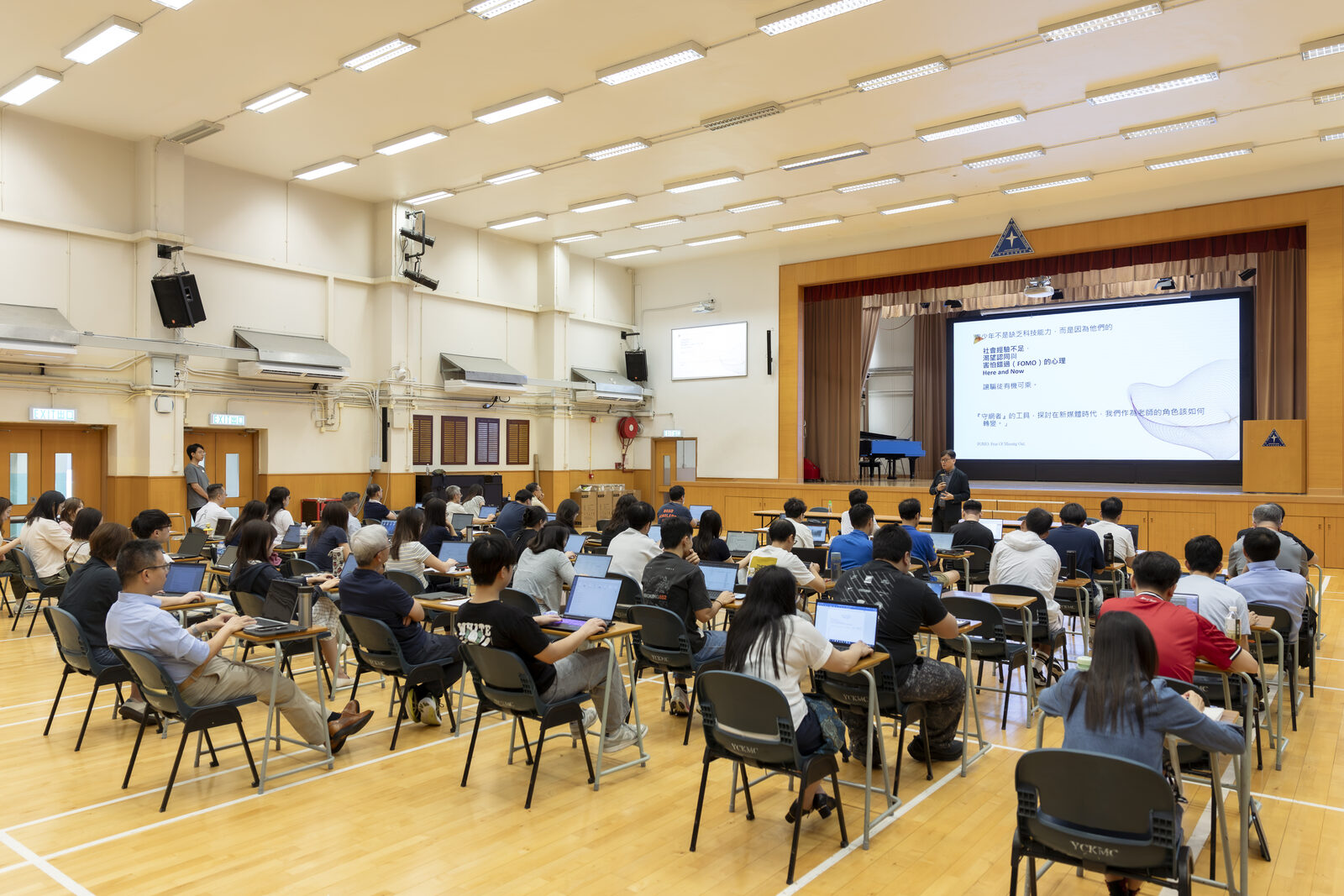
The talk opens by naming three pressures on students — peer relationships, family expectations, and academic progression — and emphasises that young people are not short on technical skill, but on life experience, identity affirmation, and the fear of missing out (FOMO). They chase immediate gratification, get hijacked by present-moment emotions, and chase social validation — which is why adults are usually the last to know when something goes wrong.
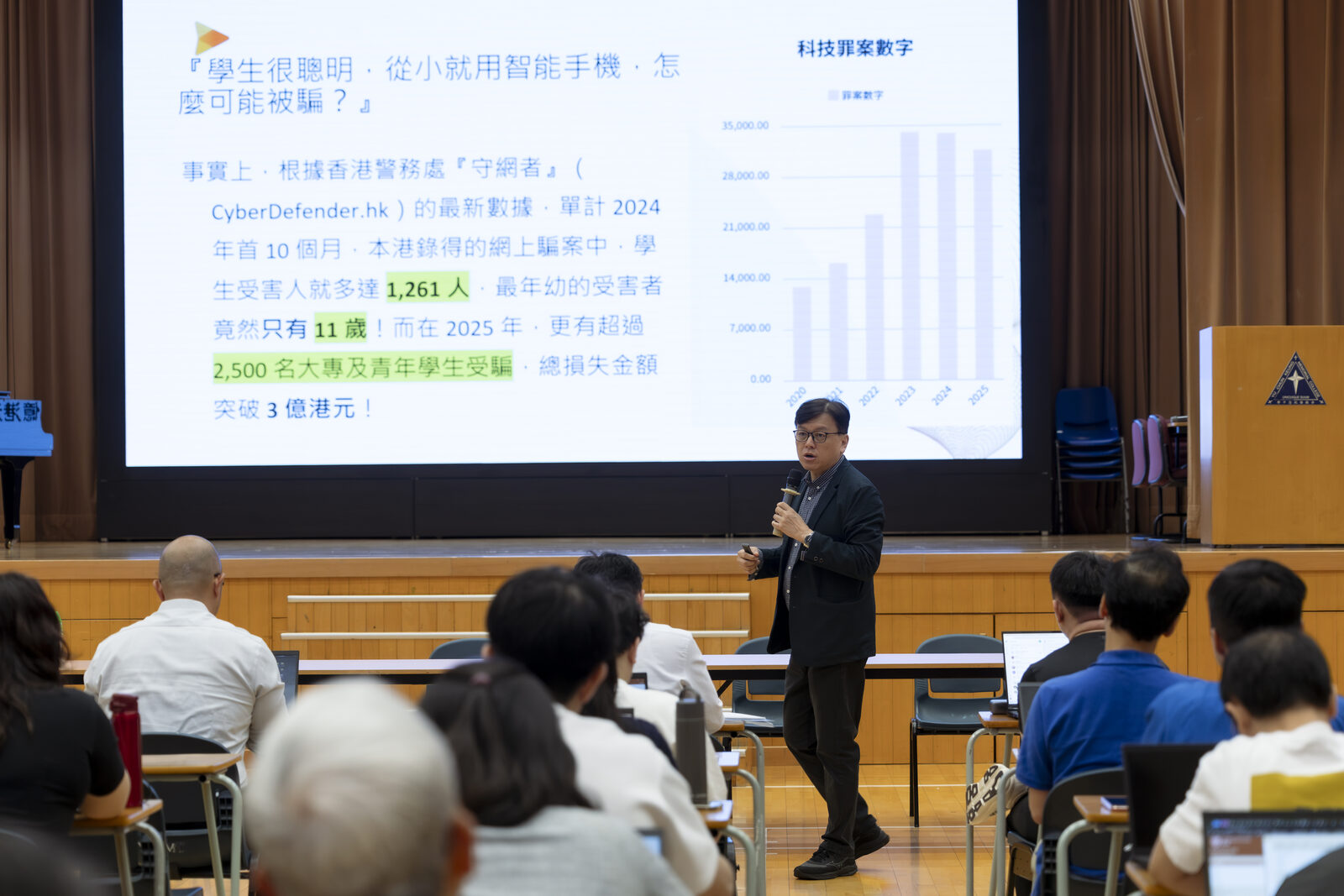
HK Police 'Cyber Defender' data: victims as young as 11
According to Hong Kong Police Force's 'Cyber Defender' (守網者) data, students are frequent scam victims — the youngest reported victim was just 11 years old — and more than 2,500 tertiary and youth students were defrauded in 2025 alone.
The four high-risk scam types
The talk unpacks four high-risk scam types targeting students: e-commerce and gaming cons, online job and part-time traps, social-platform sextortion, and online romance and phishing.
AI deepfakes meet algorithmic targeting
Scammers have started using AI deepfake tools to swap faces or clone voices — impersonating a friend in distress — and combine this with social-platform algorithms that precision-target scam ads at the most vulnerable users.
A four-category fraud taxonomy and the key questions for each
The talk classifies online fraud into four buckets: account and data theft, direct monetary fraud, emotional manipulation and trust exploitation, and technical intrusion — and provides a key question for each.
The closed-loop framework: prevent, recognise, respond, support
To counter these threats, the talk proposes a closed-loop response framework — prevent, recognise, respond, support — that turns prevention from a one-off briefing into a sustained habit.
A home–school cooperation mechanism
The talk recommends a home–school cooperation mechanism: information synchronisation and reporting channels, dual-track education for parents and students, daily at-home protection and conversation rituals, and crisis response plus pastoral support.
Tool: HK Police 'Scameter+'
The talk introduces the Hong Kong Police Force's 防騙視伏器 (Scameter+), teaching parents and students to verify the other party's details before any transaction.
Role shift: from monitor to cybersecurity coach
Finally, the talk calls on adults to shift from being 'monitors' to becoming 'cybersecurity coaches' for the children in their care — accompanying them as fellow travellers rather than inspecting them as overseers.
Role-play scripts and a closing call to action
The talk closes with situational role-play scripts and a clear call to action: when a child runs into trouble online, the first person they think of should be a parent or trusted adult — not a scammer.