AI Should Not Give Answers, but Ask Questions (Part 1): Retrieval Practice Breaks the Illusion of Knowing
Some students spend hours revising and freeze in the exam; others spend a fifth of the time and remember everything. The difference is not intelligence but method. This part explains the trap of re-reading, and how retrieval practice and the Feynman Technique turn familiarity into real mastery.
Some students spend hours revising and still freeze in the exam
Some students spend hours revising and freeze in the exam; others spend a fifth of the time and remember everything. We tend to attribute the difference to intelligence, but students are about equally smart. The real difference is method.
Re-reading manufactures the illusion of knowing
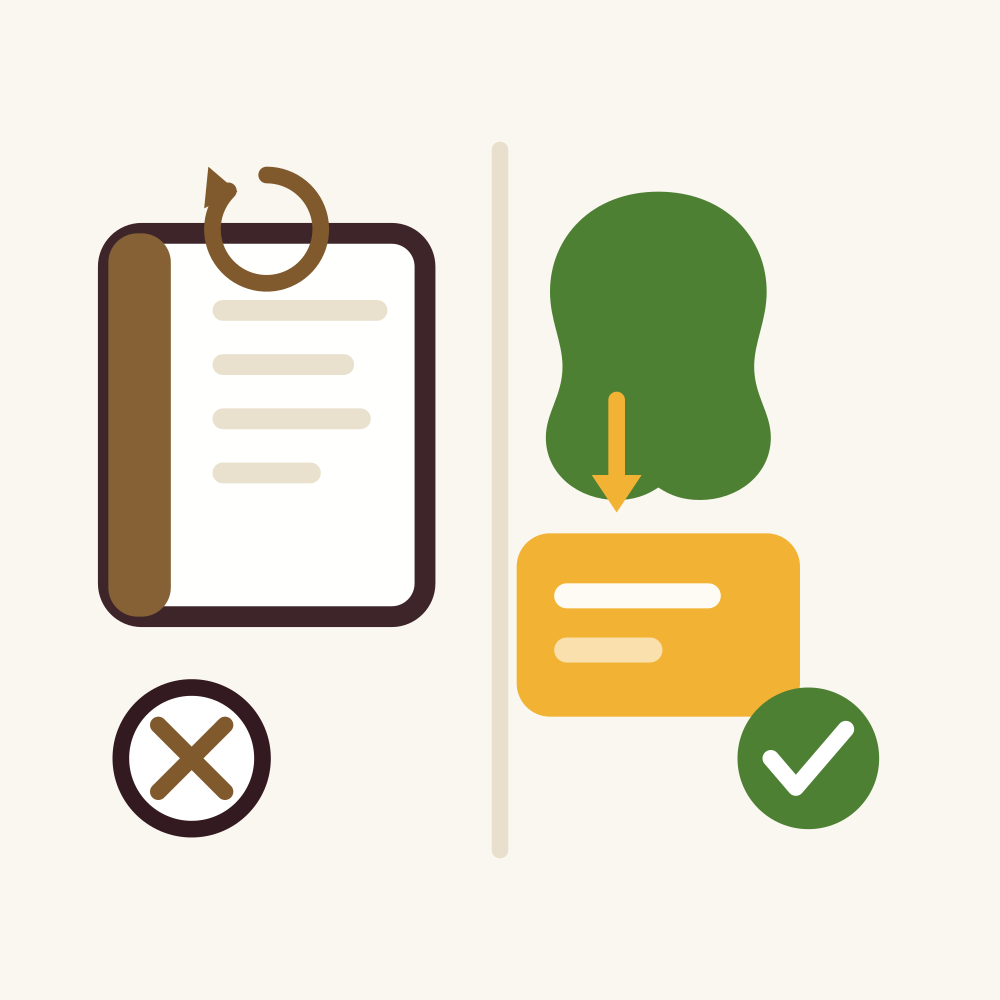
Cognitive science research shows that re-reading produces an illusion of knowing. The third time you read the same chapter, the formulas and worked examples look familiar, so you assume you have the material mastered.
Familiarity is not mastery. Repeated sensory input makes information feel "recognisable", but that feeling is shallow and passive. Learners confuse "being able to remember it" with "actually understanding it", and their sense of comprehension inflates.
It is like watching a hundred skating tutorials and thinking you have it, only to fall the moment you reach the ice. Watching is input; skating is output. Mathematics is the same: read the worked example three times, feel like you have it, then try it yourself — swap the row and the column, forget the negative sign, muddle the second row. Understanding someone else's calculation and doing it yourself are separated by a chasm. There are a thousand ways to be wrong and only one way to be right. Without those collisions, the brain never learns the correct path.
Retrieval practice: making memory durable
To break the illusion of knowing, learners need active retrieval practice. The core is simple: without looking at the material, try to recall and restate what was learned. The act of pulling information out of the brain strengthens long-term memory.
Karpicke and Blunt's 2011 study in Science found that students using retrieval practice retained roughly 50% more over the long term than students who re-read. Forms include free recall, practice quizzing, and test generation. Free recall is considered the most effective because it asks learners to use fewer cues, forcing a deeper retrieval.
A higher-order form of retrieval practice is the method advocated by Nobel laureate Richard Feynman: "If you can't explain it simply, you don't really understand it." The Feynman Technique has learners restate knowledge in their own words to expose gaps, triggering retrieval practice and elaborative processing at once. Explaining a concept to someone else requires pulling it from long-term memory and reorganising it into a coherent narrative — which strengthens memory and deepens understanding.
If you can't explain it simply, you don't really understand it.
Teaching implication: every "this part is important" that students cannot restate in their own words was, in effect, never said. Before the next lesson, try leaving three minutes at the end of each unit for students to close their notes and explain the concept to a partner. Those three minutes often produce more than another thirty minutes of talking.